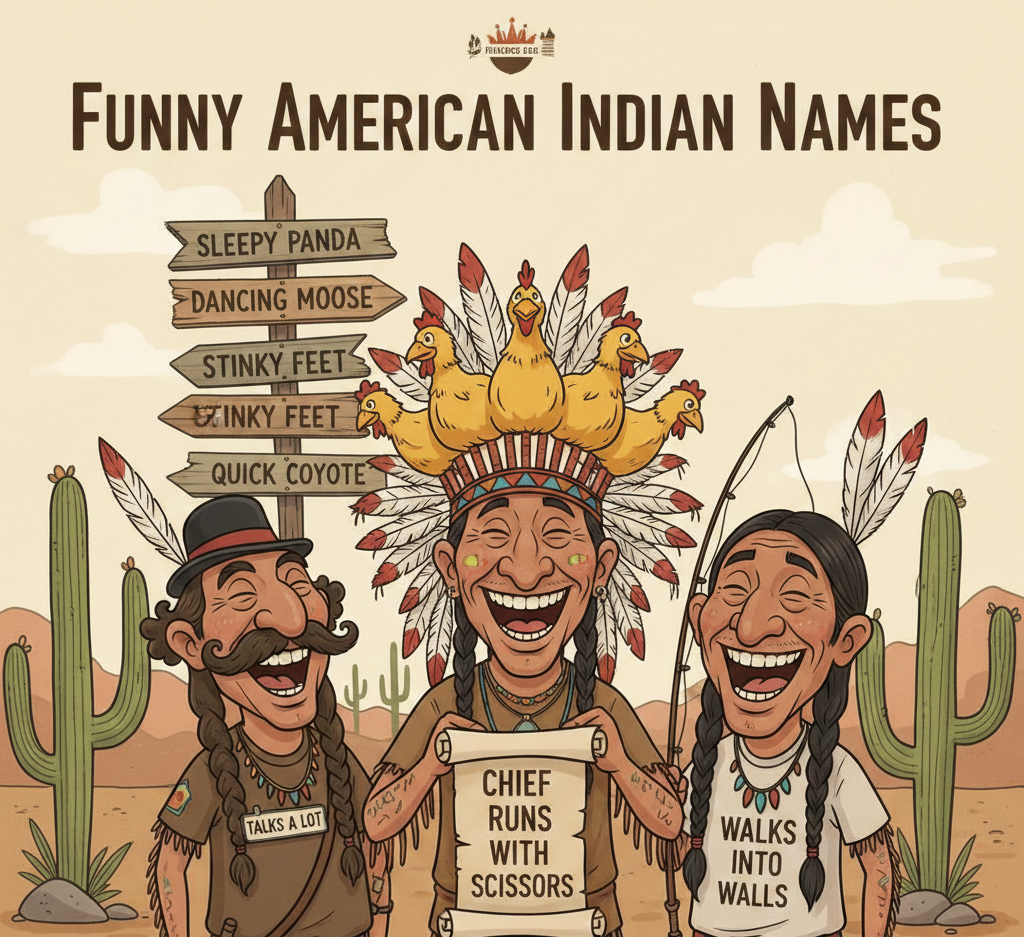

Ever come across a name that made you smile—not because it was meant to be a joke, but because it sounded amusing in modern English? That’s often the case with funny American Indian names. These names weren’t created for laughs, yet translations, phonetics, and cultural differences sometimes make them feel humorous today.
In this article, we’ll explore why some Native American names sound funny to modern ears, share well-known examples, explain their real meanings, and clear up common misconceptions—all in a respectful, human way.
What Makes Some American Indian Names Sound Funny?
Before diving into examples, it’s important to understand why these names may sound humorous today.
Language Translation Effects
Many Native American names come from:
-
Lakota
-
Cherokee
-
Navajo
-
Apache
-
Ojibwe
When translated into English, poetic descriptions like “He Who Walks Loudly” or “Laughing Water” can sound unusual—or funny—outside their cultural context.
Literal Meanings in English
Native naming traditions often use:
-
Nature-based imagery
-
Personality traits
-
Life events
-
Spiritual symbolism
English translations remove the cultural depth and leave behind phrases that may feel overly literal or amusing.
Examples of Funny American Indian Names (With Real Meanings)
These names are often labeled as funny American Indian names online, but each has genuine meaning and history.
Famous Historical Names
H3: Funny-Sounding Names With Serious Meanings
-
Crazy Horse – Refers to spiritual visions, not madness
-
Sitting Bull – Symbolizes leadership and strength
-
Young Man Afraid of His Horses – Indicates wealth and status
-
Plenty Coups – Means “many achievements,” not humor
-
Two Dogs Fucking – A literal translation that shocks modern readers but followed traditional naming practices of the time
These names weren’t jokes; they were identity markers rooted in culture, honor, and storytelling.
Are Funny American Indian Names Actually Meant to Be Funny?
Short answer: No.
Cultural Perspective Matters
In Native American cultures:
-
Names can change over a lifetime
-
Humor may exist, but names are rarely jokes
-
Names tell stories, not punchlines
What sounds funny today is usually the result of direct translation, not intention.
Common Themes in Native American Names
Understanding naming patterns helps explain why some names feel unusual.
Traditional Naming Elements
-
Animals (Wolf, Bear, Horse, Eagle)
-
Natural forces (Wind, Thunder, Water)
-
Personality traits (Brave, Silent, Quick)
-
Life moments (First battle, vision quest)
When these elements are translated word-for-word, the result can feel awkward or amusing in English.
Why Are Funny American Indian Names So Popular Online?
Search trends show high interest in funny American Indian names, and here’s why:
-
Curiosity about history
-
Interest in unique names
-
Meme culture exaggeration
-
Lack of cultural context
Unfortunately, many lists online remove meaning and promote stereotypes.
Respect vs. Mockery: Where to Draw the Line
It’s okay to acknowledge humor—but not at the expense of respect.
How to Approach the Topic Responsibly
-
Laugh with curiosity, not ridicule
-
Learn the meaning behind the name
-
Avoid using sacred or cultural names casually
-
Respect tribal differences
Humor doesn’t have to mean disrespect.
Modern Native American Naming Trends
Today, many Native Americans choose:
-
Traditional names within the tribe
-
English names for public use
-
Blended or symbolic names
This evolution helps preserve culture while navigating modern society.
FAQs About Funny American Indian Names
Are funny American Indian names real?
Yes, many are real historical names, but their humor comes from English translation, not original intent.
Did Native Americans name people after jokes?
No. Names were meaningful and often spiritual or descriptive.
Why do some Native American names sound strange today?
Because English lacks the cultural and linguistic nuance of Native languages.
Is it offensive to laugh at these names?
Laughing without understanding can be disrespectful. Learning the meaning shows appreciation.
Can I use an American Indian name for a character?
It’s best to research carefully and avoid sacred or tribal-specific names unless done respectfully.
Conclusion: Humor, History, and Understanding
Funny American Indian names may sound amusing at first glance, but behind each one is history, symbolism, and cultural depth. What feels funny today was once powerful, meaningful, and deeply personal.
If you’re interested in unique names, cultural history, or linguistic quirks, keep exploring—but always with curiosity and respect. Understanding the story behind the name is what truly makes it memorable.